 Restaurant Recipes Real Recipes. Clear Steps. Made to Work Every Time.

Chicken Teriyaki Bowl Recipe for a Balanced Weeknight Dinner
Need a home‑cooked dinner but are short on energy? Try the chicken teriyaki bowl recipe, a quick, comforting meal that features creamy sauce, tender chicken, and fresh veggies all in one bowl.
Ingredients
Method
- Marinate the chicken. In a small bowl, mix 1 tbsp soy sauce and 1 tsp rice vinegar. Add the chicken, stir, and let it sit for at least 10 minutes while you prepare the other ingredients. This adds a base saltiness and helps the meat absorb flavor.
- Make the teriyaki sauce. In a small saucepan, combine the soy sauce, mirin (or honey‑water), sugar, garlic, and ginger. Warm over medium heat until the sugar dissolves and the sauce slightly thickens, about 3–4 minutes. If it gets too thick, add a splash of water. Set aside.
- Cook rice. Use leftover rice if you have it. It fries better. If cooked fresh, fluff and let it cool down slightly before assembling.
- Sear the chicken. Heat oil in a skillet over medium-high heat. Add the chicken and sear for 4-5 minutes per side until golden brown and cooked through. Remove and let rest for 5 minutes, then cut into bite-sized strips.
- Steam or sauté veggies. In the same pan (wipe out if there are burnt bits), add a splash of water, broccoli florets, and carrot slices. Cover and let steam for 2-3 minutes until tender-crisp. Drain any water.
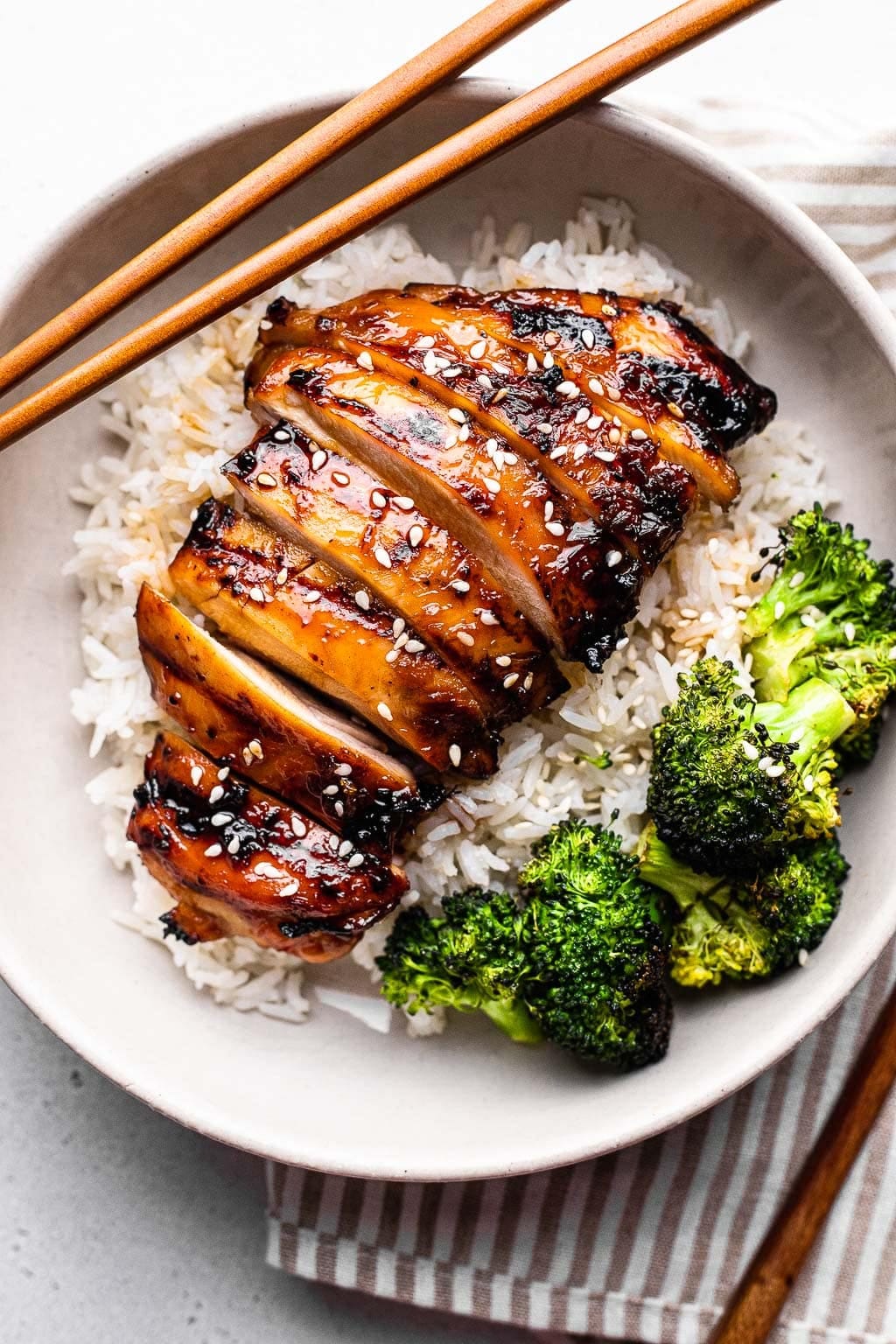
- Assemble the bowl. Divide rice among bowls. Top with chicken strips and vegetables. Drizzle generous teriyaki sauce. Garnish with green onions and a sprinkle of sesame seeds or a few drops of toasted sesame oil.
Video
Notes
Real cooking note: I’ve made this bowl dozens of times after long workdays. When you’re tired, it’s a quick flick of the wrist, marinade, skillet, steam, and dinner is ready in under 25 minutes. But skip the rush: letting the sauce rest a minute off the heat helps mellow its sharpness and brings out deeper umami.
What You’ll Need (Serves 2–3)
- 2 boneless, skinless chicken thighs (about 300g / 10 oz), trimmed
- 1 TBSP soy sauce (for marinades)
- 1 tsp rice vinegar (for marinade)
- 1 TBSP neutral oil (vegetable, canola, or light olive oil)
- 1 small broccoli crown, cut into florets
- 1 medium carrot, thinly sliced on a bias.
- 2 green onions, sliced (for garnish)
- Sesame seeds or toasted sesame oil (optional garnish)
For the teriyaki sauce:
- ¼ cup soy sauce
- 2 tbsp mirin (or substitute: 1 tbsp honey + 1 tbsp water)
- 1 Tbsp sake or water (optional).
- 1 tbsp brown sugar or coconut sugar
- 1 garlic clove, minced
- ½ tsp grated fresh ginger (or ¼ tsp ground ginger)
- 1 cup jasmine or long‑grain rice (cooked, about 2 cups cooked)
Step‑by‑Step Instructions
- Marinate the chicken. In a small bowl, mix 1 tbsp soy sauce and 1 tsp rice vinegar. Add the chicken, stir, and let it sit for at least 10 minutes while you prepare the other ingredients. This adds a base saltiness and helps the meat absorb flavor.
- Make the teriyaki sauce. In a small saucepan, combine the soy sauce, mirin (or honey‑water), sugar, garlic, and ginger. Warm over medium heat until the sugar dissolves and the sauce slightly thickens, about 3–4 minutes. If it gets too thick, add a splash of water. Set aside.
- Cook rice. Use leftover rice if you have it. It fries better. If cooked fresh, fluff and let it cool down slightly before assembling.
- Sear the chicken. Heat oil in a skillet over medium-high heat. Add the chicken and sear for 4-5 minutes per side until golden brown and cooked through. Remove and let rest for 5 minutes, then cut into bite-sized strips.
- Steam or sauté veggies. In the same pan (wipe out if there are burnt bits), add a splash of water, broccoli florets, and carrot slices. Cover and let steam for 2-3 minutes until tender-crisp. Drain any water.
- Assemble the bowl. Divide rice among bowls. Top with chicken strips and vegetables. Drizzle generous teriyaki sauce. Garnish with green onions and a sprinkle of sesame seeds or a few drops of toasted sesame oil.
🌱 Seasonal Variations & Flavor Twists
- Spring twist: Swap carrots for sautéed snap peas and add fresh scallions. Use a little lemon zest to brighten up the flavors.
- Summer light bowls: Use shredded zucchini or summer squash with bell pepper strips. Skip the sugar in the sauce. Let fresh veggies and light soy keep it simple.
- Autumn comfort version: Add roasted sweet potato cubes, and stir a teaspoon of maple syrup into your teriyaki sauce for deep sweetness.
- Winter warming bowl: Stir a pinch of chili flakes or a dash of toasted sesame oil into the sauce for warmth and depth. Add steamed baby spinach or kale for an extra dose of greens.
🍽 Serving Suggestions (Easy Meal Prep + Balanced Dinner Ideas)
- Served alongside a side salad with sesame‑soy dressing, cucumbers, shredded cabbage, and carrots to give crunch and freshness.
- Pair with miso soup or simple clear broth to complete a balanced meal (carbs + protein + vegetables + hydration).
- Make a double batch. Store the chicken and sauce separately, then reheat over rice for a quick lunch or an easy next‑day dinner.
- Use in wraps or lettuce cups. Swap rice for butter‑leaf lettuce, and you get a lighter, lower-carb version.
🔧 Tips, Tricks & Honest Cooking Notes
- Day‑old rice is best. Fresh rice tends to clump or get mushy when mixed with a sauce. Leftover refrigerated rice fries up fluffier and gives a better texture.
- Dry the chicken before searing. Moisture on the surface steams the meat instead of browning it. Pat dry with a paper towel for crisp, golden edges.
- Don’t overcook the sauce. Teriyaki sauce reduces quickly; watch it carefully. A too‑thick sauce becomes sticky and salty when it cools.
- Balance your saltiness. Because both soy and mirin (or sugar) add salt and sweetness, taste before serving. If it’s too salty, balance it with a squeeze of lime or a spoonful of plain rice to mellow it down.
- Watch out for vegetables overcooking. Broccoli and carrots can go from crisp-tender to soggy quickly. Cook just until they are bright and slightly firm.
- Storage caution: Teriyaki sauce thickens and becomes salty when stored cold. If saving leftovers, store the sauce separately and reheat gently with a splash of water.
Real cooking note: I’ve made this bowl dozens of times after long workdays. When you’re tired, it’s a quick flick of the wrist, marinade, skillet, steam, and dinner is ready in under 25 minutes. But skip the rush: letting the sauce rest a minute off the heat helps mellow its sharpness and brings out deeper umami.
⚠️ What Could Go Wrong And How To Avoid It
- If you marinate too long (over 30 min), the chicken can get overly salty or start to taste a bit “cured.” Keep it short.
- Reducing the sauce or using heavy‑handed soy sauce adds salt fast; it’s better to under-salt and adjust at the end.
- Using freshly cooked rice instead of cold rice often leads to a mushy texture. If that’s all you have, let it cool for at least 15 minutes, uncovered, so some moisture can evaporate.
Nutrient Amount
- Calories ~ 520–580 kcal
- Protein ~ 45–50 g
- Carbohydrates ~ 60–70 g
- Fat ~ 8–12 g
- Fiber ~ 4–6 g (with veggies)
- Sugar (from the sauce + veggies) ~ 10–15 g
- Sodium-moderate depends heavily on soy sauce, and the amount of soy sauce used
Notes on the estimate:
- A typical chicken‑teriyaki bowl with rice, chicken, sauce, and vegetables falls around 500‑700 calories, depending on portion size and sauce volume.
- Lean protein (chicken) contributes most of the protein. A bowl often has 45–50 g of protein when using ~200–250 g of cooked chicken.
- Carbs come mainly from rice. Using white jasmine or long‑grain rice in typical amounts (≈1 to 1.5 cups cooked per serving) drives the carb total up.
- Fat is relatively low if you trim the chicken, use moderate oil, and limit added fats, but teriyaki sauce, depending on sugar content, adds extra calories and some sugar.
- Vegetables (broccoli, carrots, etc.) add fiber, vitamins, and minerals without many added calories, but also increase volume, making the meal more balanced.